
About us
The History of BKV, Part 1
Development of community transport
Public transport has always played an essential role in the history of Budapest, because of the situation of this city. Even in ancient times, the place was considered as a traffic nodal point, because the terrestrial roads converged and crossed the River Danube here. Historical sources from a later date mention the Pest-Buda ferry, which gained even greater importance after the settlement of the Hungarian tribes. Again in later years, commercial traffic crossed the river via a boat-bridge, while the possibility of crossing by boat continued to survive until the 19th century, and started to decline only when steam-boating began to gain popularity and when permanent bridges were built to connect Pest and Buda (Chain Bridge: 1849; Margaret Bridge: 1876).
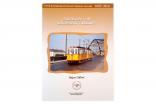
The omnibus, appearing first in the streets of Paris (1662), gradually conquered the metropolises of Europe, and it finally appeared in Pest in 1832, too. The launching of omnibus services is regarded as the start of community transport in Budapest. However – in just three decades – a dangerous competitor emerged: the horse tramway.


The horse drawn tramway appeared on the streets of Pest on 1st August 1866. The first horse tram tracks were constructed between Széna Square and the Újpest (New Pest) railway station. The Pest Public Road Rail Tracks Company (PKVT) founded on 22nd May 1865 applied for and was awarded a permit to construct the rail tracks. Only two horse tramway lines were built in Buda: one in Zugliget (1868) and one in Óbuda (1869), both built by the Buda Public Road Rail Tracks Company (BKVT). The horse tramway was the first transport vehicle – considered as a very modern one at that time – being able to satisfy mass transportation needs. With its fast and regular runs the horse tramway brought certain parts of the expanding city closer to one another, and thereby played an essential role in the development of the town in the years to follow.
After
the inauguration of the Chain Bridge a new traffic node took shape, which
gained even greater importance when the Tunnel was opened in 1855. The terminal
stations for the horse tramways heading toward Zugliget (1868) and Óbuda (1869)
were set up at the bridge-end. Thus, a new transport means to ensure connection
to the Castle district had to be established close to an already significant
traffic node.
The idea of building a funicular was raised by Ödön Széchenyi, the youngest son of Count István Széchenyi (the “greatest Hungarian”, Minister of Transport, the founder of modern Hungary through his ideas and his work. Several institutions bear his name today.) Ödön Széchenyi managed to obtain the approval of the Town of Buda, the Ministry of Interior and Transport and the “Imperial and Royal Army Commander-in-chief” of Buda. The building company signed the contract with the Army Treasury on 25th May 1868. Ödön Juraszek and Henrik Wohlfarth drew the designs. The funicular of the Buda Castle Hill started operating as the second transport vehicle of that type in the continent driven by steam at that time (the operator being the Buda Hill-track Company Limited by Shares) on 2nd March 1870. The cars being assembled in the Spiering Factory of Vienna had a special design: they contained three cabins built one above the other in a step-like arrangement. This technical solution was unique all over the world, and so became the greatest technical attraction of the funicular.
In
1870 Nikolaus Riggenbach the designer of Europe's first cogwheel railway visited
Budapest. His
concept was to connect Sváb Hill, a district developing into a holiday resort
in the 1850s, to the rest of the capital city of Hungary. The representative of the
Basel-based company, the Internationale Gesellschaft für Bergbahnen applied for
permission to construct a cogwheel railway to Sváb Hill in 1873. The agreement
on this project was signed on 7th April 1873. The cogwheel railway
departed for the first time in its history as the third such vehicle in Europe at 4 p.m. on 24th June 1874. Seeing the
successful operation of this railway, the line was extended up to Széchenyi
Hill in 1890.
The
demand to join the conurbation settlements into the city transport emerged by
the development of the city. The first steam-driven HÉV suburban railway line
ran from Közvágóhíd (Slaughterhouse) to Soroksár. When BKVT applied again for
the preparatory work permit of its extension up to Dunaharaszti this section
was not even introduced to operation. Both sections were opened to commercial
traffic in 1887. In
the following year two further lines were inaugurated: the Kerepesi Rd – Cinkota line and the
Filatori Dam – Szentendre.
In this period of time both the horse tramway and the suburban railway lines were operated by the Budapest Public Road Rail Tracks Company. Thus, taking into consideration the two completely different ways of operation, the Ministry decided to separate these two transport divisions. Thus the Hungarian Industrial and Trading Bank – holding a majority of the shares in BKVT – established the “Budapest Suburban Railways Joint-Stock Company” (BHÉV) as a subsidiary of BKVT in 1889.
The Brick Factory of Szentlőrinc was planning to construct a suburban railway line to the capital city of Hungary. The Budapest-Szent-Lőrinc Suburban Railway Company Limited by Shares (BLVV) started commercial traffic in 1887. The activities of BLVV were characterised by a marked shift toward passenger transport from the 1890s.
Transports between Ráckeve and Dunaharaszti began in 1892. Then in 1899 the Budapest-Budafok Suburban Electric Railway Company Limited by Shares (BBVV) opened the Budapest-Budafok service.
As
a new achievement of technical advancement, the electrical railway (i.e. the
tramway) emerged at the end of the 19th century. The thought of
constructing an urban tramway line popped up as early as in 1883, but four
years had to elapse until its full realisation. The first Budapest tramway departed from Nyugati
(Western) Railway Station in 1887. The pilot-operation train consisting of two
cars travelled on a single track of 1000 mm gauge, 1 km in length, up to Király Street. The
first rail track of normal gauge (1435 mm), on the Egyetem Square – Stáció Street (today: Baross Street) – Köztemető Road (today: Orczy Square), was put into service in 1889. In 1888 the tramway
line on the Great Boulevard
(Nagykörút) founded by Siemens et Halske, Mór Balázs and Lindheim at Cie, was
given the name of Budapest City Railway (BVV). In 1891 the English-Hungarian
Bank bought the tramway network from the previous owners, together with the
associated equipment, and founded a joint-stock company under the name of Budapest
Electric City Railways. The first CEO of the company was Mór Balázs, the person
tirelessly working on the establishment of the Budapest tramway system. The tramway soon
became a major means of public transport in Budapest.
From 1896 onward, the passengers had a choice of not only BKVT and BVVV, but could also travel on the vehicles operated by the Budapest-Újpest-Rákospalota Electric Railway Company Limited by Shares (BURV). This latter company first opened the so-called “Megyer line”.
Following
the electrification of the horse tram lines and then the BLVV-system also in
1900, and as BVV, BURV and BBVV had begun operating electric tram services
right from the beginning, the tramway network of Budapest was actually completed by this time.
The
great Avenue was opened on 20th August 1876, with the aim of
emphasising that the capital of Hungary
was a real metropolis. Even before the completion of the construction of this road,
plans for building a horse tram line on it were submitted. But the city leaders
decided to reject the idea of a tram line along Andrássy Avenue for good. The idea of an
underground rail line originated from Mór Balázs. The designs were elaborated with
the co-operation of Siemens and Halske. The construction of the underground
railway took only 22 months. On 2nd May 1896 the first underground
railway of the European mainland, driven by electric railcars was officially
launched. Emperor Franz Joseph, who was
staying Budapest
at this time, on the occasion of the ceremonious opening of the “Millenary
Exhibition”, visited the underground railway on 8th May 1896 and
travelled from the terminal station at Gizella Square to the Zoo in car number
20, which was specifically designed for this occasion, and was called “royal
carriage”. The monarch “most graciously” gave his consent to naming the railway
after him. Thus the corporate name for the railway became Franz Joseph
Underground Electric Railway Company Limited by Shares (FJFVV).
In
Budapest the
first bus service began its operation in 1915. The buses departed from the
corner of Aréna (Dózsa György) Road and Nagy János (Benczúr) Street, ran along Andrássy Avenue and
up to Vilmos császár (Bajcsy-Zsilinszky) Road.
Under
a government decree dated 22nd November 1918, all railways became
public property. Furthermore, pursuant to the same decree the railway networks
and other property of the joint-stock companies were to be managed by the city
of Budapest under the name of Integrated City Railways of Budapest (BEVV).Under
the Hungarian Soviet Republic of 1919
BEVV became public property (i.e. was nationalised).
In
1922 the Budapest Metropolitan Transport Company Limited by Shares (BSZKRT) was
established. With this, the last obstacle to creating a unified public
transport system in Budapest
was removed. BSZKRT was the first and later became the most important municipal
enterprise employing over 10 thousand people.
In
1933 István Hantos Jr., the engineer came forward with the idea of building a
cable railway from Zugliget to János Hill. But 37 years had to pass until its
realization. The Council of the 12th district operated the
chair-lift for seven years and in 1977 they decided to hand its operation over
to BKV.
BSZKRT, the company integrating all transport divisions, was finally dissolved in 1949. New transport enterprises were formed: the Metropolitan Electric Railway Municipal Company (FVKV), the Metropolitan Bus Municipal Company (FAKV), the Metropolitan Suburban Railway Municipal Company (FHVKV), the Metropolitan Electric Railway Main Workshop Municipal Company (FVFKV), the Metropolitan Bus Main Workshop Municipal Company (FAFKV) and the Metropolitan Railway Construction Municipal Company, and so the years of fragmented operation followed up until 1967.

Route planner
Timetables
Services map
Featured pages