

 Magyar
 English

BKV’s museum in Szentendre opens with a legendary microbus
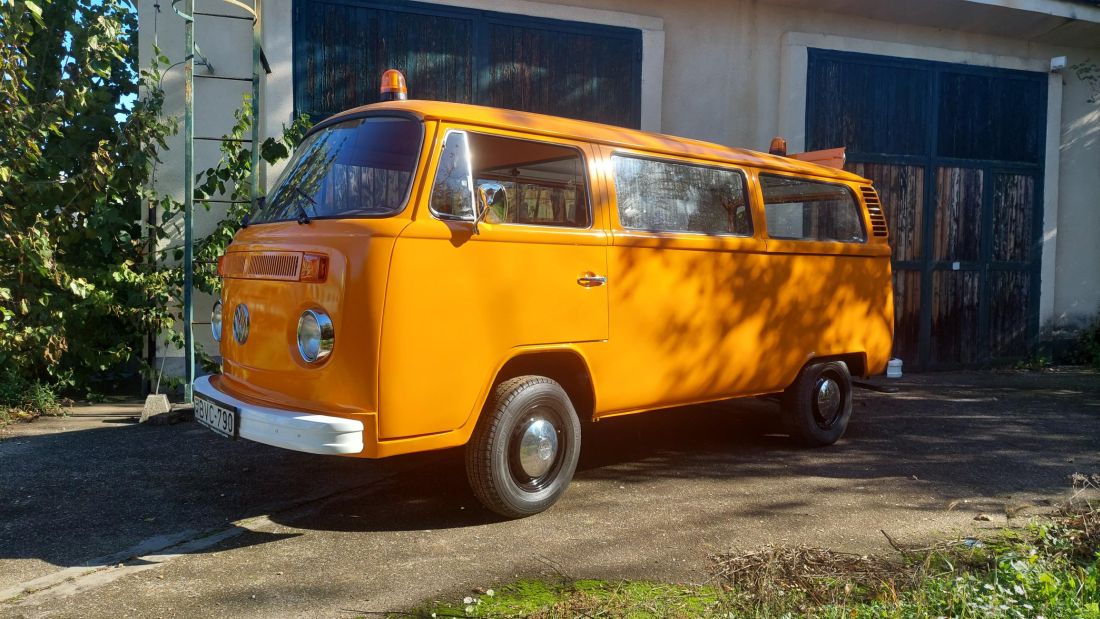
As a result of BKV’s value preservation activities, the company’s line of heritage vehicles has been enriched with another bus. Visitors to the Urban Public Transport Museum can also see the legendary Volkswagen, a renovated Type 2, from 1 April. The transport museum, which opened in the former BHÉV depot built in 1914, is welcoming its guests again from spring to autumn.
This year, the Szentendre Urban Public Transport Museum is welcoming its visitors with a new vehicle. While last year, the Margaret Island sightseeing service, named the “Dangler”, was introduced to public transport enthusiasts after its renovation, this year a new, decommissioned, renovated vehicle has been added to the museum.
This Volkswagen model was released in 1950, and then, almost creating a trend, determined the path for microbus development for a long time. Its model name was determined in comparison to the VW Beetle (Typ1), as it is the second vehicle type of the legendary car manufacturer, which was created following the idea of VW's Dutch vehicle importer. By the end of the seventies, the Typ2 had many subtypes, depending on its wide use, such as the Westy (camper van), the Caravelle or the Samba, but it also appeared as an ice cream van, a refrigerator van, a fire and ambulance vehicle or even a police van. Depending on the bodywork, in addition to the minibus, it was also produced as a truck and a panel van.
The BKV minibus also fits into this series, which was produced in 1977 and originally worked as a traffic disruption removal vehicle for the transport company, and later became a rail lubricator with a special conversion. By using the legendary VW in this way, the BKV probably created a completely unique vehicle. The minibus has now been added to the Szentendre vehicle collection alongside old trams, buses, trolleybuses, HÉVs and other railway vehicles.
The transport museum’s historically restored and presented vehicle fleet of more than 60 restored vehicles awaits lovers of old-time transport. For example, it includes a UV tram and its trailer that operated in the capital city after 1956, a unique prototype vehicle that was not mass-produced: the Hungaroplan tram (Csufi), and the Ganz-Hunslet metro train with track number 400. The museum’s visual and information material presenting the BKV era was renewed 3 years ago, for the museum’s 30th birthday.
The Urban Public Transport Museum welcomes visitors again from 1 April this year.
Address: 2000 Szentendre, Dózsa György út 3., right next to the HÉV terminal and the Volán station.
The BKV Deák tér museum welcomes visitors all year round. The temporary exhibition on the 150th anniversary of the Cogwheel Railway can be viewed until the end of April.
The address of the Millennium Underground Museum: Budapest, Deák Ferenc tér metro underpass.
BKV Zrt.
2025. március. 31.